
Wound and scar care
Good early wound care and consistent scar management make a genuine difference to how a scar settles over time. This page sets out the key steps, the products we recommend, and how our skin clinic can support you further along your healing journey.
Protecting your wound
In the early days after surgery, protecting the wound is the priority. Keep dressings clean and dry, and follow the specific instructions you are given about when they can be changed or removed.
Once healed, protect the area from direct sun exposure — new scar tissue is especially vulnerable to UV damage and pigmentation, so sunscreen or covering the area is important for at least the first year.
Understanding scar formation
Scars change considerably over time. They are often at their most obvious in the first few months — firm, raised, or pink — before gradually softening and fading. This process typically continues for 12 to 18 months. Patience matters here; judging a scar too early is a common source of unnecessary worry.
Supporting your scar at home
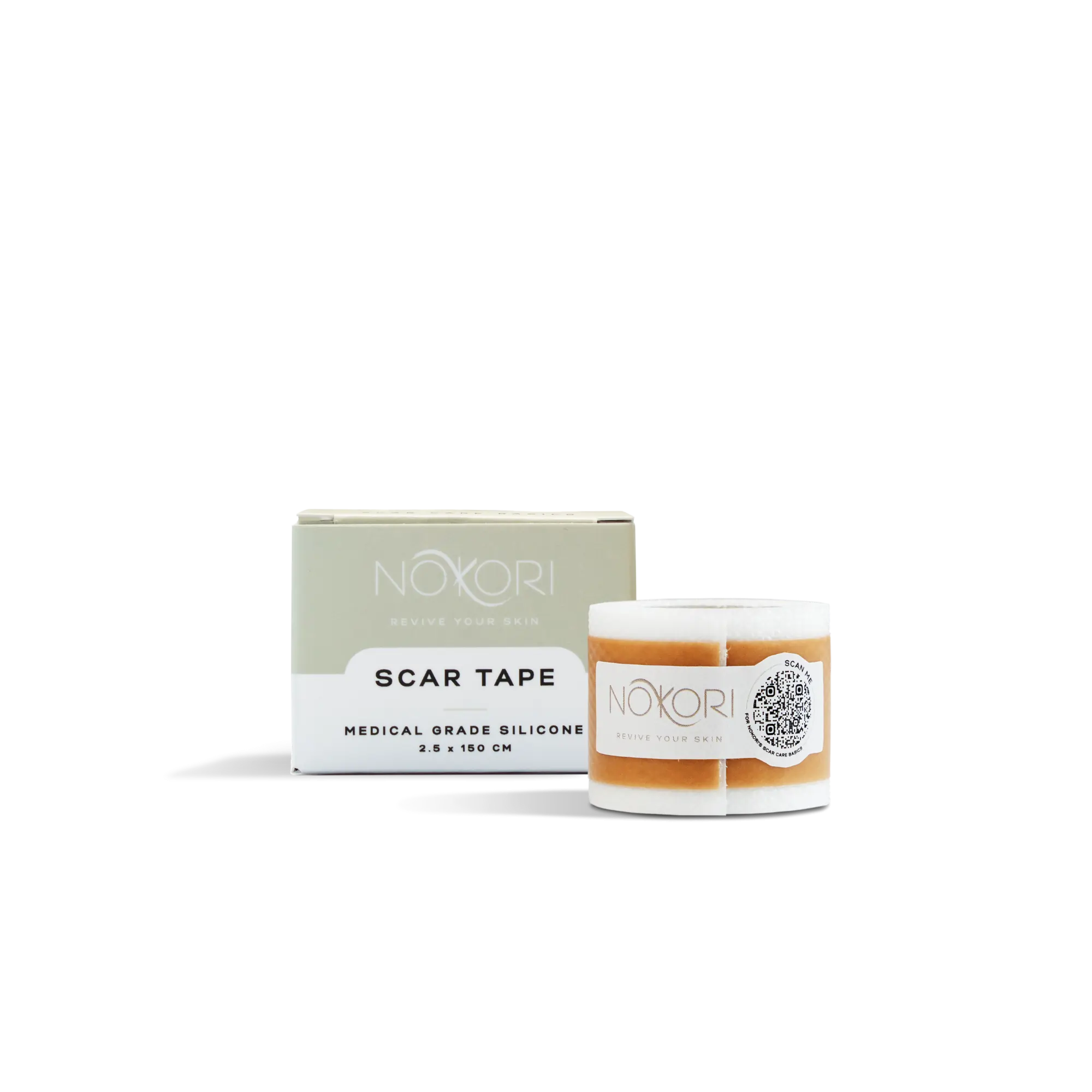
Nokori Silicone Scar Tape
Silicone is one of the most well-established, evidence-backed options for supporting scar maturation. Nokori Silicone Scar Tape hydrates the scar and forms a protective barrier that can help soften texture and reduce redness over time. It is worn directly over a healed incision, typically for several weeks to several months.
Available for purchase at reception or in our online shop.
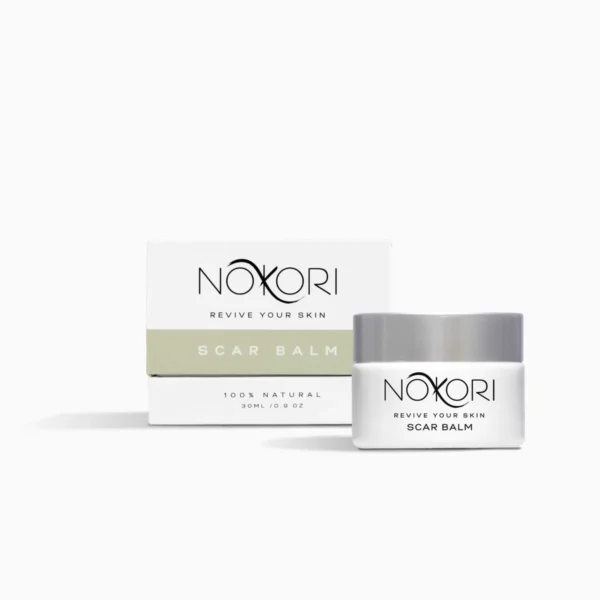
Nokori Scar Balm
A 100% natural, Australian-made balm formulated specifically for scar massage. Once your incision has fully healed, massaging a thin layer into the scar once or twice daily helps soothe and nourish the skin and support its natural barrier, so the area feels softer and more comfortable as the scar matures.
Available for purchase at reception or in our online shop.
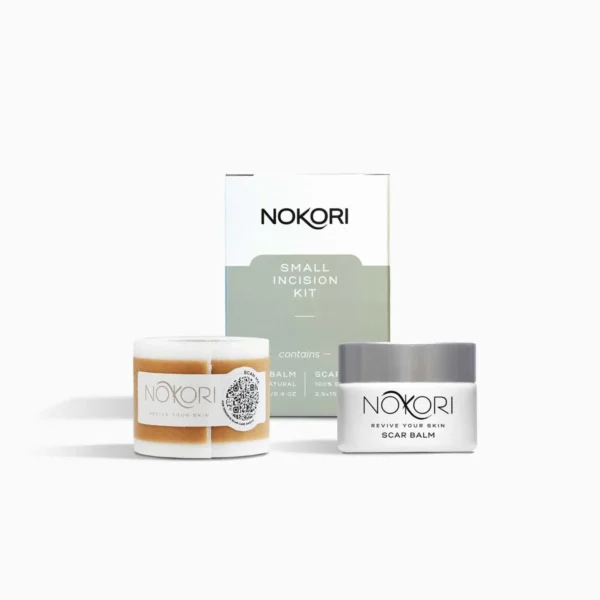
Nokori Small Incision Kit
Combines a 12ml Nokori Scar Balm with a 2.5 × 150cm roll of Nokori Silicone Scar Tape: the balm for daily massage, the tape to protect and flatten the scar. Designed for scars after minor procedures such as small excisions, mole removals and keyhole incisions, and started once your surgeon confirms the incision has fully healed.
Available for purchase at reception or in our online shop.
Treatments that can support scar improvement
Once a wound is fully healed, or during the healing phase, several of our skin clinic treatments may help further refine and improve the appearance of a scar. Our Dermal Clinician can develop a plan tailored to you and your wound to get the best possible outcome.
LED Therapy
A gentle, non-invasive treatment that supports skin repair and calms inflammation, often considered as an early step once the wound has closed. A course of 10 sessions is recommended for best results, however we also offer a 5-session package as well.
SkinPen Micro Needling
Creates controlled micro-channels in the skin to stimulate the body’s own collagen production, which can help improve scar texture and softness over a course of treatments.
CO2 Fractional Laser
A more intensive resurfacing treatment that can improve more established or textured scarring, with a longer recovery than gentler options.
Pico Laser
Can help address scar pigmentation and discolouration with minimal downtime.
A complimentary consultation with our Dermal Clinician
As a patient of Dr. Anavekar’s, you are welcome to a complimentary consultation with our Dermal Clinician to discuss your scar and which of the above options, if any, may be of benefit to you.
This page is general information only. Every scar heals differently, and any treatment plan should be discussed with Dr. Anavekar or our Dermal Clinician based on your individual healing.
Questions about your scar?
Our team can help you understand your options and book a complimentary consultation.