
Breast Augmentation
Breast augmentation surgery is performed to enhance breast size, shape, and fullness using implants or fat transfer techniques. This is one of the most commonly performed cosmetic surgical procedures worldwide. A consultation is essential to discuss your individual goals, anatomy, and suitability.
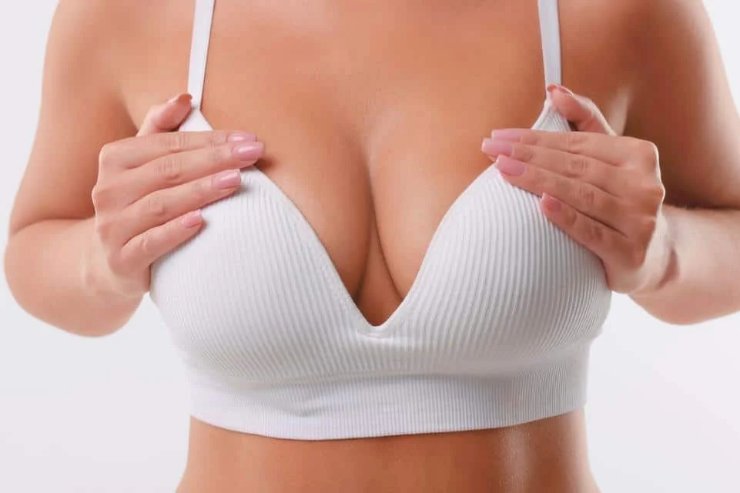
What is breast augmentation?
Breast augmentation, also called augmentation mammoplasty, increases the volume of the breast by placing an implant beneath the breast tissue or chest muscle. If there is significant ptosis (a lower or looser breast position), a breast lift may be required either instead of, or in combination with, augmentation — this is assessed during a consultation.
The procedure is performed in an accredited hospital.
Common reasons patients consider breast augmentation include:
- Breasts that have not developed to the size the patient would like
- Loss of breast volume following pregnancy, breastfeeding or weight loss
- Noticeable asymmetry between the two breasts
- Reconstruction following mastectomy or injury
- Correction of congenital differences such as tuberous breast deformity
Breast augmentation is a personal decision. It should not be undertaken to meet someone else's expectations, and Dr. Anavekar will discuss your motivations openly during consultation.
Am I a suitable candidate?
Suitability is determined during a consultation following examination and discussion of your medical history. Generally, candidates are:
- Physically healthy, with no active infection or untreated illness
- At a stable weight
- Non-smokers, or willing to stop smoking well before and after surgery — smoking significantly increases the risk of complications overall, including wound healing problems
- Realistic in their expectations about what surgery can and cannot achieve
- Aware that pregnancy and breastfeeding will alter the outcome of a breast augmentation
Referral requirement. Since July 2023, patients seeking cosmetic surgery in Australia must have a referral — from a GP, or from another specialist. For breast augmentation performed for cosmetic reasons, this referral is mandatory before surgery can proceed.
Psychological assessment. Dr. Anavekar screens all cosmetic surgery patients for body dysmorphic disorder (BDD), as required under the AHPRA guidelines. Where indicated, referral for psychological assessment will be arranged before surgery is considered.
Choosing an implant
There is no single "best" implant. The choice is made together during consultation, based on your measurements and priorities.
Implant filling
Silicone gel implants are the most commonly used implants in Australia. Modern cohesive gel implants hold their shape and are generally considered to feel closer to natural breast tissue. If the shell ruptures, the gel tends to stay within the implant pocket, which means rupture may not be immediately obvious — MRI or ultrasound monitoring is recommended.
Saline implants are filled with sterile salt water. A rupture is immediately apparent as the implant deflates and the fluid is harmlessly absorbed. They are firmer to the touch and are used less frequently in Australia.
Implant shape
Round implants provide fullness across the whole breast, including the upper pole. Because they are symmetrical, rotation does not affect appearance.
Anatomical (teardrop) implants have more volume in the lower portion, mimicking the natural slope of the breast. They can rotate, which may require correction.
Implant surface
Smooth implants move more freely within the pocket. Textured implants were developed to reduce capsular contracture. Certain textured implants have been associated with BIA-ALCL and some have been withdrawn from the Australian market by the TGA. Dr. Anavekar will discuss current evidence and implant selection with you directly.
Placement, incisions and fat transfer
Implant placement
Subglandular — above the chest muscle, beneath the breast tissue. Shorter recovery, but the implant edge may be more visible in patients with little natural tissue.
Submuscular or dual plane — partially or fully beneath the pectoralis major muscle. Provides more soft tissue coverage over the implant and may reduce visible rippling. Recovery tends to be more uncomfortable initially.
Incision location
Inframammary — in the fold beneath the breast. The most commonly used approach, giving direct access and predictable scar placement.
Periareolar — around the lower border of the areola. May affect nipple sensation or breastfeeding.
Transaxillary — in the armpit. Avoids a scar on the breast itself.
Fat transfer
In selected patients, fat harvested by liposuction from another area of the body can be used to increase breast volume. It achieves a more modest increase than implants, some of the transferred fat is reabsorbed, and more than one procedure may be needed. It is not suitable for everyone.
What is involved
Before surgery
Before surgery, you’ll have more than one consultation, where measurements are taken, options discussed, and implant sizing trialled together. A seven-day cooling-off period applies between your initial consultation and any booking for cosmetic surgery, in line with AHPRA guidelines. You’ll be given written information about risks, costs and recovery, and asked to sign an informed financial consent form.
Blood tests, and in some cases breast imaging, may be arranged. You must cease smoking, and pause certain medications or supplements that can increase bleeding risk.
On the day
Breast augmentation is performed in an accredited private hospital, with anaesthesia administered by a specialist anaesthetist. The length of your operation depends on your individual anatomy, the technique agreed at consultation, and whether any additional procedure is performed at the same time. Most patients stay overnight, though some are suitable for day surgery.
Incisions are made in the agreed location, a pocket is created, the implant is positioned, and the incisions are closed in layers. A surgical bra or compression garment is applied.
After surgery
You will need someone to drive you home and, ideally, to stay with you for the first 24 hours. Pain relief is prescribed. Follow-up appointments are scheduled to monitor healing.
Your recovery
Recovery varies considerably between individuals. The following is a general guide only.
| TIMEFRAME | WHAT TO EXPECT |
|---|---|
| First 48 hours | Chest tightness, swelling and discomfort. Regular pain relief needed. Rest. |
| Week 1 | Discomfort easing. Most patients stop strong analgesia. Surgical bra worn continuously. |
| Weeks 2–3 | Many patients return to desk-based work. No lifting, no driving until cleared. |
| Weeks 4–6 | Light activity resumed. Still no heavy lifting or upper body exercise. |
| 6 weeks | Most normal activity resumed, including exercise, once cleared at review. |
| 3–6 months | Swelling settles. Implants settle into their final position. |
| 12–18 months | Scars continue to fade and mature. |
Compression garments are typically worn for six weeks. Scars are permanent, but generally fade over 12 to 18 months. Sun exposure to scars should be avoided during this period.
Potential benefits
Breast augmentation may:
- Increase breast volume and improve proportion relative to your frame
- Improve symmetry where there is a noticeable difference between breasts
- Restore volume lost after pregnancy, breastfeeding or weight loss
- Improve fit and comfort in clothing
Outcomes vary between individuals and cannot be guaranteed. Surgery cannot deliver a specific outcome, and results depend on your anatomy, healing and the agreed surgical plan.
Risks and complications
All surgery carries risk. Breast augmentation is a significant operation performed under general anaesthetic, and complications can occur.
Key risks include:
- General surgical and anaesthetic risks — bleeding, infection, blood clots, delayed wound healing, and poor or thickened scarring
- Capsular contracture — hardening of the scar tissue around the implant, causing firmness, distortion or pain
- Implant rupture, malposition or rippling — which may require further surgery to correct
- Altered nipple or breast sensation, which may be permanent, and possible difficulty breastfeeding in future
- Further surgery — implants are not lifetime devices, and most patients will need revision, replacement or removal at some stage
- BIA-ALCL — a rare cancer of the immune system associated with textured breast implants, treatable when diagnosed promptly
- Dissatisfaction with the aesthetic outcome, including size, shape, position or symmetry
This is a summary, not a complete list. Dr. Anavekar will discuss the risks relevant to your individual circumstances, medical history and chosen technique in detail during your consultation, and again before you provide informed consent. Please raise any concerns with her directly.
Costs
The total cost of breast augmentation includes the surgeon's fee, the anaesthetist's fee, hospital or day-surgery fees, the implants, and follow-up care. Costs vary depending on the complexity of your procedure.
Breast augmentation performed for purely cosmetic reasons does not attract a Medicare rebate, and private health insurance generally does not contribute. Where surgery is performed for reconstructive reasons — for example, following mastectomy, or to correct a significant congenital deformity — a Medicare item number may apply and a rebate may be available.
You will receive a written quote setting out all costs before you commit to surgery, as part of the informed financial consent process. If you have questions about fees, contact the practice on 03 9075 0005.
Frequently asked questions
How long do breast implants last?
Breast implants are not lifetime devices. Many will last well over a decade, but some fail earlier. Most patients will need revision, replacement or removal at some stage. Ongoing monitoring is recommended.
Will I be able to breastfeed after breast augmentation?
Many women are able to breastfeed after augmentation, but the procedure can affect milk supply or nipple sensation, particularly with a periareolar incision. It cannot be guaranteed either way. Discuss your plans for future pregnancy at consultation.
Do breast implants affect breast cancer screening?
Implants can obscure part of the breast tissue on a mammogram. Screening is still recommended and still effective — always tell the radiographer you have implants so additional views can be taken.
How do I choose an implant size?
Size is determined by your chest measurements and tissue characteristics as much as by preference. Implants that are too large for your frame carry a higher risk of rippling, tissue thinning and loss of firmness over time. Sizing is trialled at consultation.
How long until I can exercise?
Light walking is encouraged early. Most patients return to full exercise, including upper body work, at around six weeks — but only once cleared at review.
Do I need a referral?
Yes. A referral from a GP or another specialist is required before cosmetic surgery in Australia.
How soon after consultation can I have surgery?
A minimum seven-day cooling-off period applies between your initial consultation and booking, in accordance with AHPRA guidelines. In practice, most patients take longer.
Why Evolve
Dr. Namrata Anavekar is a Fellow of the Royal Australasian College of Surgeons and a specialist plastic and reconstructive surgeon. She graduated with honours from Monash University and completed the Australian Plastic Surgery Training Program, with rotations through St Vincent's Hospital, The Royal Children's Hospital, The Alfred and The Austin. She subsequently undertook an international fellowship in Switzerland and France.
Dr. Anavekar is a board member of the Australasian Society of Aesthetic Plastic Surgeons (ASAPS) and has authored multiple research publications. She holds several public and private hospital appointments, and is a professional member of ASAPS, the Australian Society of Plastic Surgeons (ASPS), the Royal Australasian College of Surgeons (RACS), the Australian Medical Association (AMA), and the International Society of Aesthetic Plastic Surgery (ISAPS).
Dr. Anavekar is part a relatively small group of experienced female specialist plastic surgeons in Melbourne, and consults from Bulleen and Sunbury locations.
Related procedures
Ready to take the next step?
Book a consultation with Dr. Anavekar to discuss your goals in a warm and supportive environment, where every question is welcome.
Book a ConsultationCall 03 9075 0005Important: In accordance with AHPRA guidelines, a minimum 7-day cooling-off period applies after your second cosmetic surgery consultation and before any procedure. The information on this page is for general educational purposes only and does not constitute medical advice. Individual results vary. A consultation with a Specialist Plastic Surgeon is required to discuss your suitability.