
Breast Reduction Surgery
Breast reduction surgery is performed to reduce breast size and relieve symptoms of physical discomfort, such as chronic neck and back pain, associated with excessively large breasts. A consultation is necessary to assess your individual needs.
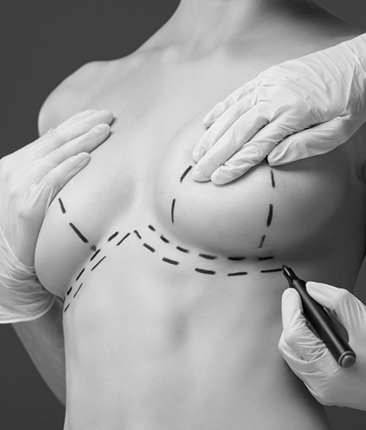
What is a breast reduction?
Reduction mammoplasty removes breast tissue, fat and excess skin, then reshapes what remains into a smaller, lighter and higher breast. The nipple and areola are repositioned and, where they have stretched, reduced in size. Breast reduction generally results in the breast being lifted as part of the procedure.
Disproportionately large breasts — macromastia — place sustained load on the neck, shoulders and back. Patients commonly report:
- Persistent neck, shoulder and upper back pain
- Grooving and indentation from bra straps
- Skin irritation, rashes or infection in the fold beneath the breast
- Difficulty exercising or finding clothing that fits
- Poor posture
- Self-consciousness or unwanted attention
- Restricted participation in sport and physical activity
Breast reduction is also used to correct significant asymmetry, and to treat gynaecomastia in men — a separate procedure, assessed individually.
Am I a suitable candidate?
Suitability is determined during a consultation following examination and discussion of your symptoms and medical history. Generally, candidates are:
- Experiencing physical symptoms attributable to breast size, or seeking reduction for well-considered personal reasons
- Physically healthy and at a stable weight
- Non-smokers, or willing to stop well before and after surgery — smoking increases the risk of complications, including infection, delayed wound healing and nipple-related complications
- Realistic about scarring, which is permanent and unavoidable
Patients ideally need to have completed breast development before undergoing breast reduction. Although it is not a prerequisite to have completed one’s family, it must be appreciated that pregnancy and breastfeeding will change the results of a breast reduction, as do weight fluctuations. Results are not permanent and will continue to change over time with hormonal and weight fluctuations. Where symptoms are significant in a younger patient, timing is discussed individually.
All patients require a referral from a GP or another specialist before their first consultation. Because breast reduction is frequently performed for medical rather than cosmetic reasons, the additional cosmetic surgery requirements — including psychological screening for body dysmorphic disorder (BDD) and the seven-day cooling-off period after a second consultation — may not apply in the same way. If it is deemed that your surgery is cosmetic in nature and you do not qualify for a Medicare (MBS) item number, these requirements do apply, in line with Australian requirements introduced in July 2023. Dr. Anavekar will clarify which pathway applies to you during your consultation.
Reduction techniques
There are several examples of breast reduction techniques. Here are just a few examples:
Vertical (lollipop) reduction
An incision around the areola and vertically down to the breast crease. Suited to small and moderate reductions. Avoids the horizontal scar in the breast fold.
Anchor (inverted-T) reduction
An incision around the areola, vertically down, and horizontally along the breast crease. The most widely used technique for larger reductions, allowing removal of substantial tissue and skin.
Liposuction-assisted reduction
In selected patients whose breasts are predominantly fatty and whose skin has good elasticity, liposuction may reduce volume with minimal scarring. It does not remove skin or lift the breast, so it suits a narrow group of patients.
Free nipple graft
Used in particularly large reductions, however there is a significant risk of impairing nipple sensation and the ability for future breastfeeding. It is used only where necessary and discussed thoroughly beforehand.
What is involved
Before surgery
An initial consultation and physical examination is undertaken to determine your suitability for this procedure. The risks and recovery will be discussed with you. Formal clinical photography and measurements will be undertaken prior to surgery. Where a Medicare rebate may apply, documentation of your symptoms and any prior conservative treatment — physiotherapy, supportive bras, weight management — is important, so bring relevant records.
Breast imaging may be arranged depending on your age and history. You must cease smoking, and pause medications or supplements that can increase bleeding risk.
On the day
Surgery is usually performed under general anaesthetic administered by a specialist anaesthetist, in an accredited private hospital. The length of your operation depends on your anatomy, the volume being removed and the technique used. Most patients stay one night.
Tissue and skin are removed, the remaining breast is reshaped and supported, and the nipple and areola are repositioned — usually remaining attached to their blood and nerve supply. Drains are sometimes used. A surgical bra is applied.
After surgery
Arrange for someone to drive you home and stay with you initially. Pain relief is prescribed. Follow-up appointments monitor healing, drain removal where used, and scar maturation.
Your recovery
Recovery varies between individuals. The following is a general guide only.
| TIMEFRAME | WHAT TO EXPECT |
|---|---|
| First 48 hours | Swelling, bruising and discomfort. Regular pain relief. Rest. Drains removed if used. |
| Week 1 | Discomfort easing. Surgical bra worn continuously, day and night. |
| Weeks 2–3 | Many patients return to desk-based work. No lifting, no driving until cleared. |
| Weeks 4–6 | Light activity resumed. No heavy lifting or upper body exercise. |
| 6 weeks | Most normal activity resumed, including exercise, once cleared at review. |
| 3–6 months | Swelling settles and breasts soften into final shape and size. |
| 12–18 months | Scars fade and flatten. Silicone gel or tape may be recommended. |
Many patients notice relief of neck, shoulder and back symptoms relatively early, though swelling means the final shape takes months to emerge.
Support garments are typically worn for six weeks. Scars are permanent, usually fade substantially over 12 to 18 months, and should be protected from sun exposure during that period.
Potential benefits
Breast reduction may:
- Relieve neck, shoulder and back pain related to breast weight
- Reduce bra strap grooving and skin irritation beneath the breast
- Improve ability to exercise and participate in physical activity
- Improve posture
- Improve proportion, fit of clothing and ease of finding bras
- Reduce self-consciousness related to breast size
Breast reduction provides both symptom relief and improves posture. Nonetheless, outcomes vary between individuals and cannot be guaranteed, and results depend on your anatomy, healing and the agreed surgical plan.
Risks and complications
All surgery carries risk. Breast reduction is a significant operation performed under general anaesthetic, and complications can occur.
Key risks include:
- General surgical and anaesthetic risks — bleeding, infection, blood clots, and delayed wound healing
- Scarring — permanent, and in some patients thickened, raised, widened or keloid
- Wound healing problems, particularly where the incisions meet beneath the breast
- Altered nipple or breast sensation, which may be permanent, and reduced ability or inability to breastfeed
- Partial or complete loss of the nipple and areola — uncommon, but a recognised risk, particularly in smokers and very large reductions
- Asymmetry in size, shape or nipple position, sometimes requiring revision
- Dissatisfaction with the final size — either more or less reduction than hoped for
- Fat necrosis — firm lumps of scarred fatty tissue that may need investigation or removal
This is a summary, not a complete list. Dr. Anavekar will discuss the risks relevant to your individual circumstances, medical history and chosen technique in detail during your consultation, and again before you provide informed consent. Please raise any concerns with her directly.
Costs and Medicare
The total cost includes the surgeon's fee, the anaesthetist's fee, hospital fees and follow-up care.
Unlike most breast surgery, breast reduction is frequently performed for medical reasons, and a Medicare item number may apply where specific clinical criteria are met — generally relating to documented physical symptoms and the volume of tissue to be removed. The relevant Medicare Benefits Schedule (MBS) item number is typically 45523 (bilateral reduction mammaplasty with surgical repositioning of the nipple), though this can vary depending on your individual circumstances. Where an item number applies, private health insurance may also contribute to hospital costs, subject to your level of cover and any waiting periods.
Eligibility is assessed individually and cannot be confirmed before consultation. We encourage you to check with your private health fund and Medicare about your eligibility for relevant rebates ahead of your appointment — this can give you a clearer picture of your likely out-of-pocket cost before you come in. Bring documentation of your symptoms and any prior treatment, as this supports the assessment.
You will receive a written quote setting out all costs and any expected rebates before committing to surgery. For questions about fees or health fund cover, contact the practice on 03 9075 0005.
Frequently asked questions
Is breast reduction covered by Medicare?
It can be, where clinical criteria are met — typically involving documented physical symptoms and the amount of tissue to be removed. This differs from breast augmentation, which is not rebatable when performed cosmetically. Eligibility is assessed at consultation.
How much smaller will my breasts be?
This is discussed during your consultation and depends on your frame, tissue characteristics and goals. Surgeons work to a proportionate result rather than a specific cup size, since bra sizing is inconsistent between brands.
Will breast reduction relieve my back pain?
Many patients report meaningful improvement in neck, shoulder and back symptoms. It cannot be guaranteed, particularly where there are other contributing causes such as underlying spinal conditions.
Can I breastfeed after a breast reduction?
Most women can breastfeed, however this is dependent on the individual as well as the breast reduction technique used. This will be discussed further during your consultation if it is relevant to your circumstances.
Will my breasts get bigger again?
Significant weight gain and pregnancy can increase breast size after reduction. Maintaining a stable weight helps preserve the result.
Should I lose weight first?
Being at a stable weight generally produces a better and more durable result. Dr. Anavekar will advise on timing at consultation.
Why Evolve
Dr. Namrata Anavekar is a Fellow of the Royal Australasian College of Surgeons and a specialist plastic and reconstructive surgeon. She graduated with honours from Monash University and completed the Australian Plastic Surgery Training Program, with rotations through St Vincent's Hospital, The Royal Children's Hospital, The Alfred and The Austin, followed by an international fellowship in Switzerland and France.
Dr. Anavekar is a board member of the Australasian Society of Aesthetic Plastic Surgeons (ASAPS) and has authored multiple research publications. She holds several public and private hospital appointments, and is a professional member of ASAPS, the Australian Society of Plastic Surgeons (ASPS), the Royal Australasian College of Surgeons (RACS), the Australian Medical Association (AMA), and the International Society of Aesthetic Plastic Surgery (ISAPS).
Dr. Anavekar is part a relatively small group of experienced female specialist plastic surgeons in Melbourne, and consults from Bulleen and Sunbury locations.
Related procedures
Ready to take the next step?
Book a consultation with Dr. Anavekar to discuss your symptoms and goals in a warm and supportive environment.
Book a ConsultationCall 03 9075 0005Important: In accordance with AHPRA guidelines, a minimum 7-day cooling-off period applies after your second cosmetic surgery consultation and before any procedure. The information on this page is for general educational purposes only and does not constitute medical advice. Individual results vary. A consultation with a Specialist Plastic Surgeon is required to discuss your suitability.