
Breast Lift Surgery
Breast lift surgery, also called mastopexy, is designed to lift and reshape the breasts, addressing lower breast position, stretched skin, and downward-pointing nipples. A consultation is essential to determine your individual suitability.
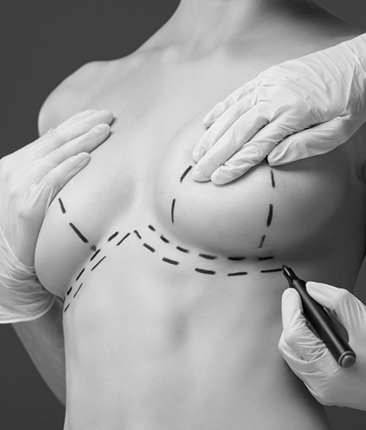
What is a breast lift?
Breast ptosis occurs when skin and the internal supporting structures of the breast stretch and lose elasticity. The nipple and areola sit lower on the breast, and the breast loses upper fullness.
A mastopexy corrects this by removing excess skin, reshaping the underlying breast tissue, and repositioning the nipple and areola to a higher, more natural position. The areola can also be reduced in size if it has stretched.
Common reasons patients consider a breast lift include:
- Changes following pregnancy and breastfeeding
- Loss of skin elasticity with age
- Significant weight loss
- Nipples that sit at or below the breast crease
- Asymmetry in breast position or shape
A lift is not an augmentation. If your surgery goal includes increasing breast volume, additional procedures such as the use of implants and/or fat transfer can be discussed with Dr. Anavekar. If your breasts are too large and heavy, a breast reduction may be more appropriate. These options are discussed during your consultation.
Am I a suitable candidate?
Suitability is determined during a consultation following examination. Generally, candidates are:
- Physically healthy and at a stable weight
- Non-smokers, or willing to stop well before and after surgery — smoking significantly increases the risk of wound healing problems and nipple complications in this procedure in particular
- Realistic about scarring, which is permanent and unavoidable
- Finished with pregnancy and breastfeeding, or aware that future pregnancy may undo the result
Referral requirement. All patients require a referral from a GP or another specialist before their first consultation. If it is deemed that your surgery is cosmetic in nature and you do not qualify for a Medicare (MBS) item number, a referral is still required, in line with Australian requirements introduced in July 2023.
Psychological screening and cooling-off. Where surgery is cosmetic, Dr. Anavekar screens all patients for body dysmorphic disorder (BDD) as part of the assessment. A second consultation is required before any decision to proceed, and a minimum seven-day cooling-off period applies after that second consultation and before surgery can be booked, as required under AHPRA guidelines.
Lift techniques and scarring
The technique is chosen based on how much excess skin needs to be removed and how far the nipple needs to move. More lift generally means more scarring.
Periareolar (donut) lift
A circular incision around the areola. Suited to mild ptosis and minimal skin removal. Leaves the least visible scar, but offers limited lift.
Vertical (lollipop) lift
An incision around the areola and vertically down to the breast crease. Suited to moderate ptosis. Allows reshaping of breast tissue with a shorter scar than the anchor technique.
Anchor (inverted-T) lift
An incision around the areola, vertically down, and horizontally along the breast crease. Suited to significant ptosis or where a large amount of skin must be removed. Produces significant lift, with more scarring than the other techniques.
Lift with implants
Where volume has been lost as well as position, a lift can be combined with breast implants. Combining the two is a more complex operation with a higher revision rate, and is sometimes staged across two procedures. This is discussed in detail at consultation.
What is involved
Before surgery
Before surgery, you’ll have more than one consultation, where measurements and photographs are taken for surgical planning, and the proposed scar pattern is drawn and explained so you have a clear picture of where scars will sit. A seven-day cooling-off period applies after your second consultation and before any booking for cosmetic surgery. You’ll be given written information on risks, costs and recovery, and asked to sign an informed financial consent form.
You must cease smoking, and pause medications or supplements that can increase bleeding risk.
On the day
Surgery is usually performed under general anaesthetic administered by a specialist anaesthetist, in an accredited private hospital. The length of your operation depends on your anatomy, the technique used, and whether implants are placed at the same time. Most patients stay overnight.
Excess skin is removed, the breast tissue is reshaped and supported, the nipple and areola are repositioned — remaining attached to their blood and nerve supply — and the incisions are closed in layers. A surgical bra is applied.
After surgery
Arrange for someone to drive you home and stay with you for the first 24 hours. Pain relief is prescribed, and follow-up appointments are scheduled to monitor healing and scar maturation.
Your recovery
Recovery varies between individuals. The following is a general guide only.
| TIMEFRAME | WHAT TO EXPECT |
|---|---|
| First 48 hours | Swelling, bruising and discomfort. Regular pain relief needed. Rest. |
| Week 1 | Discomfort easing. Surgical bra worn continuously, day and night. |
| Weeks 2–3 | Many patients return to desk-based work. No lifting, no driving until cleared. |
| Weeks 4–6 | Light activity resumed. No heavy lifting or upper body exercise. |
| 6 weeks | Most normal activity resumed, including exercise, once cleared at review. |
| 3–6 months | Swelling settles and the breasts soften into their final shape. |
| 12–18 months | Scars fade and flatten. Silicone gel or tape may be recommended. |
Support garments are typically worn for six weeks. Scars are permanent. They usually fade substantially over 12 to 18 months but will not disappear, and should be protected from sun exposure during that period.
Potential benefits
A breast lift may:
- Raise the position of the breast and nipple
- Improve breast shape and firmness
- Reduce stretched or enlarged areolae
- Improve symmetry where breasts sit at different heights
- Improve comfort and fit in clothing and bras
Outcomes vary between individuals and cannot be guaranteed. Results depend on your anatomy, skin quality, healing and the agreed surgical plan. A lift does not stop future ageing, and gravity, weight change and pregnancy can alter the result over time.
Risks and complications
All surgery carries risk. A breast lift is a significant operation performed under general anaesthetic, and complications can occur.
Key risks include:
- General surgical and anaesthetic risks — bleeding, infection, blood clots, and delayed wound healing
- Scarring — permanent, and in some patients thickened, raised, widened or keloid
- Altered nipple or breast sensation, which may be permanent, and possible difficulty breastfeeding in future
- Partial or complete loss of the nipple and areola — uncommon, but a recognised risk, particularly in smokers and in larger lifts
- Asymmetry in breast shape, size or nipple position, sometimes requiring revision
- Recurrent ptosis over time, particularly with larger breasts, weight change or pregnancy
- Dissatisfaction with the aesthetic outcome, including shape, scar position or breast projection
This is a summary, not a complete list. Dr. Anavekar will discuss the risks relevant to your individual circumstances, medical history and chosen technique in detail during your consultation, and again before you provide informed consent. Please raise any concerns with her directly.
Costs
The total cost includes the surgeon's fee, the anaesthetist's fee, hospital fees and follow-up care, and varies with the complexity of your procedure.
A breast lift performed for purely cosmetic reasons does not attract a Medicare rebate. Where surgery is performed for reconstructive reasons, or in some cases following significant weight loss, a Medicare item number may apply — eligibility is assessed individually.
You will receive a written quote setting out all costs before committing to surgery, as part of the informed financial consent process. For questions about fees, contact the practice on 03 9075 0005.
Frequently asked questions
Will a breast lift make my breasts bigger?
No. A lift raises and reshapes the breast but does not add volume. If you want more fullness, particularly in the upper breast, implants can be combined with a lift. This is discussed during your consultation.
How noticeable are breast lift scars?
Scars are permanent. Their extent depends on the technique — a periareolar lift leaves the least scarring, an anchor lift the most. Scars are placed where they can be concealed by a bra or swimwear, and typically fade over 12 to 18 months.
Can I breastfeed after a breast lift?
Many women can, but the procedure can affect milk supply and nipple sensation. It cannot be guaranteed. Tell Dr. Anavekar at consultation if you plan future pregnancy.
How long do the results last?
There is no fixed timeframe. Ageing, gravity, weight change and pregnancy all continue to affect the breast. Maintaining a stable weight and wearing good support helps.
Should I have a lift or a reduction?
If your main concern is position and shape, a lift. If your breasts are also uncomfortably large and causing neck, back or shoulder symptoms, a reduction may be more appropriate — and may attract a Medicare rebate. Dr. Anavekar will advise at consultation.
Do I need a referral?
Yes, where surgery is for cosmetic reasons. A referral from a GP or another specialist is required.
Why Evolve
Dr. Namrata Anavekar is a Fellow of the Royal Australasian College of Surgeons and a specialist plastic and reconstructive surgeon. She graduated with honours from Monash University and completed the Australian Plastic Surgery Training Program, with rotations through St Vincent's Hospital, The Royal Children's Hospital, The Alfred and The Austin, followed by an international fellowship in Switzerland and France.
Dr. Anavekar is a board member of the Australasian Society of Aesthetic Plastic Surgeons (ASAPS) and has authored multiple research publications. She holds several public and private hospital appointments, and is a professional member of ASAPS, the Australian Society of Plastic Surgeons (ASPS), the Royal Australasian College of Surgeons (RACS), the Australian Medical Association (AMA), and the International Society of Aesthetic Plastic Surgery (ISAPS).
Dr. Anavekar is part a relatively small group of experienced female specialist plastic surgeons in Melbourne, and consults from Bulleen and Sunbury locations.
Related procedures
Ready to take the next step?
Book a consultation with Dr. Anavekar to discuss your goals in a warm and supportive environment.
Book a ConsultationCall 03 9075 0005Important: In accordance with AHPRA guidelines, a minimum 7-day cooling-off period applies after your second cosmetic surgery consultation and before any procedure. The information on this page is for general educational purposes only and does not constitute medical advice. Individual results vary. A consultation with a Specialist Plastic Surgeon is required to discuss your suitability.