
Neck Lift Surgery
Neck lift surgery improves visible signs of ageing in the jawline and neck, including excess skin, muscle banding, and fat deposits. It may be performed on its own or in combination with a facelift. A consultation is required to discuss your suitability.
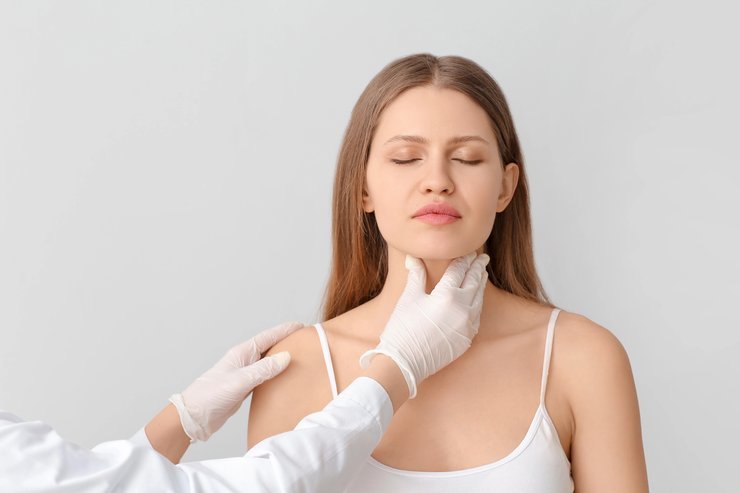
What is a neck lift?
A neck lift, or platysmaplasty, addresses loose skin, vertical muscle banding and fullness within the neck to restore a defined jawline and neck contour. The neck often shows ageing earlier and more visibly than the face, and it is frequently the feature patients notice first in photographs.
Several separate problems can affect the neck, and identifying which apply to you determines the procedure:
- Loose skin beneath the jaw
- Platysmal banding — vertical cords running down the front of the neck, caused by separation of the platysma muscle
- Submental fullness — fat beneath the chin, sitting either above or below the muscle
- Loss of jawline definition, where the border between face and neck becomes indistinct
- Ptotic submandibular glands — salivary glands that have descended and create fullness
These respond to different techniques, which is why assessment matters more than assuming a single operation fits everyone.
Neck lift or facelift?
This is the most common question at consultation, and the honest answer is that the two often belong together.
A neck lift alone may be appropriate where the concern is genuinely confined to the neck and jawline, with the mid-face and cheeks still well supported. This is more common in younger patients, or those whose neck has aged disproportionately.
A facelift with neck lift is more commonly performed than an isolated neck lift. The lower face and neck age as a unit, and jowls forming along the jawline are related to facial soft tissue descent, rather than an issue arising from within the neck. Treating the neck alone where the face has also descended can produce an unbalanced result and a less durable one.
A thorough assessment of your clinical presentation, along with your goals of surgery, are discussed at your consultation and a management plan with realistic outcomes is formulated.
Am I a suitable candidate?
Generally, candidates are:
- Troubled by loose neck skin, banding, or loss of jawline definition
- In good general health, with well-controlled medical conditions — particularly blood pressure
- Non-smokers, or willing to stop well before and after surgery
- Of reasonable skin elasticity
- Realistic about what surgery repositions and what it cannot change, including underlying bone structure and chin projection
Where the chin is naturally recessed, the neck angle may remain less defined even after a well-executed neck lift. A chin implant is sometimes discussed alongside, as improving chin projection significantly enhances the neck contour.
Referral requirement. All patients require a referral from a GP or another specialist before their first consultation. If it is deemed that your surgery is cosmetic in nature and you do not qualify for a Medicare (MBS) item number, a referral is still required, in line with Australian requirements introduced in July 2023.
Psychological screening and cooling-off. Where surgery is cosmetic, Dr. Anavekar screens all patients for body dysmorphic disorder (BDD) as part of the assessment. A second consultation is required before any decision to proceed, and a minimum seven-day cooling-off period applies after that second consultation and before surgery can be booked, as required under AHPRA guidelines.
Neck lift techniques
Platysmaplasty
An incision beneath the chin allows the separated edges of the platysma muscle to be brought together in the midline and tightened, correcting vertical banding and creating a firm muscular sling that defines the neck angle.
Lateral skin excision
Incisions around and behind the ear allow loose skin to be redraped and excess removed. This is what addresses hanging skin, and it is why a neck lift usually involves incisions around the ear rather than only beneath the chin.
Submental liposuction
Fat beneath the chin and above the muscle is removed with liposuction. In younger patients with good skin elasticity and isolated fullness, this alone may be sufficient — no skin removal, minimal scarring, faster recovery. It suits a narrow group.
Deep neck work
Fat lying beneath the platysma, and in some cases prominent digastric muscles or descended submandibular glands, contribute to fullness that superficial liposuction cannot reach. Addressing these produces a sharper neck angle but is more involved surgery.
Neck lift with facelift
Most commonly performed together, since the two areas age as a unit and share incisions around the ear.
What is involved
Before surgery
A thorough consultation process, including clinical assessment and discussion of goals of treatment is undertaken. Assessment of skin, muscle, superficial fat, deep fat, glands, and chin projection takes place. Photographs are taken and incision placement explained. A seven-day cooling-off period applies after your second consultation and before any booking for cosmetic surgery.
Blood pressure is reviewed and optimised. You must cease smoking, and cease medications and supplements that increase bleeding risk.
On the day
Surgery is usually performed under general anaesthetic administered by a specialist anaesthetist, in an accredited private hospital. The length of your operation depends on the components being addressed and whether a facelift is combined and the extent of deep neck work being performed. Most patients stay overnight.
Incisions are made beneath the chin and around the ears as required, the platysma is tightened, fat is addressed at the appropriate level, skin is redraped and excess removed. A supportive dressing or garment is applied.
After surgery
A compression garment supporting the chin and neck is worn as directed — this matters more than patients expect, as it supports the tissue while it heals into position. Sleeping elevated is important. Tightness and difficulty with neck movement are normal early on.
Your recovery
Recovery varies between individuals. The following is a general guide only.
| TIMEFRAME | WHAT TO EXPECT |
|---|---|
| First 48 hours | Swelling, bruising and tightness. Garment worn continuously. Neck movement limited. |
| Week 1 | Swelling peaks then begins to settle. Sutures typically removed towards the end of week one. |
| Week 2 | Bruising fading and often concealable. Garment often reduced to night-time wear. |
| Weeks 3–4 | Most patients comfortable returning to work and social activity. |
| 6 weeks | Exercise gradually resumed once cleared at review. |
| 3 months | Most swelling resolved. Neck contour becoming apparent. |
| 6–12 months | Final result settles. Numbness resolves gradually. Scars soften. |
Most patients plan two to three weeks away from social and professional commitments. Firmness and irregularity beneath the chin are common in the early months as tissue settles, and generally resolve.
Potential benefits
A neck lift may:
- Remove loose, hanging skin beneath the jaw
- Correct vertical platysmal banding
- Reduce fullness beneath the chin
- Restore definition to the jawline and neck angle
- Produce a more rested appearance in profile
Outcomes vary between individuals and cannot be guaranteed. A neck lift does not stop ageing, and it cannot change underlying bone structure. Results depend on your anatomy, skin quality, chin projection, healing and the agreed surgical plan.
Risks and complications
All surgery carries risk. Neck lift surgery is performed close to important structures, and complications can occur.
Key risks include:
- General surgical and anaesthetic risks — bleeding, infection, and delayed wound healing
- Haematoma — a collection of blood beneath the skin, the most common early complication, sometimes requiring return to theatre. Risk is higher with uncontrolled blood pressure.
- Nerve injury — the marginal mandibular nerve controls lower lip movement and runs close to the operative field. Injury causes asymmetry of the smile, usually temporary but occasionally permanent. The greater auricular nerve may also be affected, causing ear numbness.
- Altered or lost sensation in the neck and around the ear, which may be permanent
- Skin loss where blood supply is compromised — the greatest risk factor is smoking
- Scarring — permanent, beneath the chin and around the ears, which may thicken or widen
- Contour irregularity beneath the chin, including firmness, ridging or visible banding recurrence
- Recurrent laxity over time as ageing continues
- Dissatisfaction with the neck angle achieved, particularly where chin projection or gland position limit what is possible
This is a summary, not a complete list. Dr. Anavekar will discuss the risks relevant to your individual circumstances, medical history and chosen technique in detail during your consultation, and again before you provide informed consent. Please raise any concerns with her directly.
Costs
The total cost includes the surgeon's fee, the anaesthetist's fee, hospital fees, garments and follow-up care, and varies with the components addressed and whether a facelift is combined and the extent of deep neck work being performed.
Neck lift surgery performed for cosmetic reasons does not attract a Medicare rebate, and private health insurance does not generally contribute. Where surgery is performed for reconstructive reasons, a Medicare item number may apply.
You will receive a written quote setting out all costs before committing to surgery, as part of the informed financial consent process. For questions about fees, contact the practice on 03 9075 0005.
Frequently asked questions
Do I need a facelift as well as a neck lift?
These procedures often work well together, however it is not obligatory to combine them. The risks and benefits of performing a neck lift in isolation is discussed during your consultation. The lower face and neck age together, and jowls along the jawline relate to facial soft tissue descent rather than issues with the neck. Many patients are in fact dissatisfied with their jowls and this is best addressed with a facelift.
Can I just have liposuction under my chin?
Sometimes — in younger patients with good skin elasticity and isolated fat above the muscle. Where there is loose skin or platysmal banding, liposuction alone will not help and can make loose skin more apparent.
Will a neck lift fix my double chin?
It depends what is causing it. Fat above the muscle responds to liposuction; fat beneath the muscle needs deeper work; a recessed chin creates the appearance of fullness that neither addresses, and may be better treated with a chin implant. Assessment identifies which applies.
What are the vertical cords in my neck?
Those are platysmal bands — the edges of the platysma muscle, which separates and becomes visible with age. They are corrected by tightening the muscle in the midline, not by removing skin. Lateral bands can be improved with neuromodulators and/or surgery.
Where will the scars be?
Beneath the chin, and around and behind the ears where skin needs to be redraped. A procedure limited to liposuction may need only the small submental incision.
How long before I look presentable?
Most patients plan two to three weeks. Bruising is usually concealable by around two weeks, though swelling continues to settle for months.
How long will the result last?
A neck lift repositions tissue at a point in time and ageing continues from there. Muscle tightening tends to hold well, but skin continues to age. Weight stability and sun protection help preserve the result.
Why Evolve
Dr. Namrata Anavekar is a Fellow of the Royal Australasian College of Surgeons and a specialist plastic and reconstructive surgeon. She graduated with honours from Monash University and completed the Australian Plastic Surgery Training Program, with rotations through St Vincent's Hospital, The Royal Children's Hospital, The Alfred and The Austin, followed by an international fellowship in Switzerland and France.
Dr. Anavekar is a board member of the Australasian Society of Aesthetic Plastic Surgeons (ASAPS) and has authored multiple research publications. She holds several public and private hospital appointments, and is a professional member of ASAPS, the Australian Society of Plastic Surgeons (ASPS), the Royal Australasian College of Surgeons (RACS), the Australian Medical Association (AMA), and the International Society of Aesthetic Plastic Surgery (ISAPS).
She consults from Bulleen and Sunbury, Melbourne.
Related procedures
Ready to take the next step?
Book a consultation with Dr. Anavekar to discuss your goals in a warm and supportive environment.
Book a ConsultationCall 03 9075 0005Important: In accordance with AHPRA guidelines, a minimum 7-day cooling-off period applies after your second cosmetic surgery consultation and before any procedure. The information on this page is for general educational purposes only and does not constitute medical advice. Individual results vary. A consultation with a Specialist Plastic Surgeon is required to discuss your suitability.