
Skin Cancer Surgery
Skin cancer surgery involves the removal of cancerous skin lesions followed by appropriate reconstruction to achieve the best possible functional and cosmetic outcome. Early detection and treatment are critical. A consultation is essential to assess your individual case.
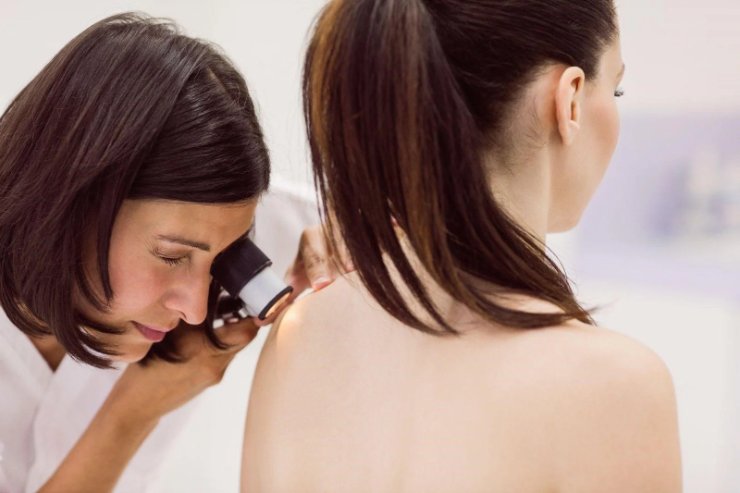
Skin cancer in Australia
Australia has among the highest rates of skin cancer in the world. Most Australians who develop a skin cancer are treated successfully, particularly when it is found early.
If you have been referred with a suspected or confirmed skin cancer, the priority is straightforward: remove it completely, confirm what it is, and restore the area properly. This page explains what that involves.
Types of skin cancer
Basal cell carcinoma (BCC)
The most common skin cancer. Grows slowly, rarely spreads elsewhere in the body, but progressively invades local tissue if untreated. Often appears as a pearly bump, a persistent scaly patch, or a sore that will not heal. Frequently found on the face, head and neck.
Squamous cell carcinoma (SCC)
The second most common. Grows faster than BCC and carries a real, though modest, risk of spreading. Often appears as a thickened, scaly or crusted spot that may be tender. More common on sun-exposed areas.
Melanoma
Less common but more serious, with a greater capacity to spread if not treated early. May appear as a new pigmented spot or a change in an existing mole — in size, shape, colour, border or symptoms such as itching or bleeding. Requires prompt assessment and treatment.
Precancerous lesions
Solar keratoses and Bowen's disease are areas of sun damage that may progress to cancer. These are often managed non-surgically, but excision is sometimes appropriate.
If you have noticed a new, changing or non-healing spot, see your GP. Early treatment is more effective, involves smaller surgery and produces better results. Do not wait for a spot to become painful — most skin cancers are not.
When a plastic surgeon is involved
Many straightforward skin cancers are managed by GPs and skin cancer clinics. Referral to a plastic surgeon is common where:
- The lesion is on the face, nose, ear, eyelid or lip, where preserving appearance and function is difficult
- The cancer is large, recurrent, or has been incompletely removed previously
- Direct closure is not possible and a skin graft or local flap is needed
- The lesion sits near important structures such as nerves, the eyelid margin or the nostril rim
- A melanoma requires wider excision, or assessment of lymph nodes
- The site is functionally important, such as the hand
The distinction is reconstruction. Removing a skin cancer is only half the problem; how the resulting defect is closed determines the long-term appearance and function of that area.
Treatment options
Surgical excision
The cancer is removed along with a margin of surrounding healthy tissue to ensure complete clearance. The tissue is sent for pathology, which confirms the diagnosis and whether margins are clear. This is the most common treatment and offers high cure rates for most skin cancers.
Direct closure
Where the defect is small enough and the surrounding skin sufficiently lax, the wound is closed directly in a line, usually placed to follow a natural skin crease.
Skin graft
Skin is taken from another area — commonly in front of or behind the ear, the neck, or the collarbone — and used to resurface the defect. Grafts are useful where direct closure is not possible, though colour and texture match can be imperfect.
Local flap
Adjacent skin is moved into the defect while retaining its own blood supply. Flaps generally give a better colour and texture match than grafts and are frequently preferred on the face, but require more planning and a longer operation.
Wider excision and sentinel node biopsy
For melanoma, a wider margin is taken. Depending on the depth of the melanoma, assessment of the sentinel lymph node may be recommended to determine whether cells have spread.
Staged procedures
Occasionally the cancer is removed first, with reconstruction performed once pathology has confirmed clear margins. This is more common with large or recurrent lesions in difficult sites.
What is involved
Assessment
The lesion is examined, its position and size assessed, and any prior biopsy or pathology reviewed. Dr. Anavekar will explain the likely excision, how the area will be reconstructed, and what the resulting scar will look like. Photographs are usually taken.
On the day
Most skin cancer excisions are performed under local anaesthetic, either in rooms or as day surgery. Larger excisions, complex reconstruction, or lesions in awkward sites may require sedation or a general anaesthetic in hospital.
The cancer is excised with the planned margin, the specimen sent for pathology, and the defect reconstructed by direct closure, graft or flap. A dressing is applied.
Pathology results
Results are usually available within one to two weeks and are discussed with you. In most cases margins are clear and no further surgery is needed. Where margins are involved, further excision may be recommended — this is not unusual and does not mean anything has gone wrong.
Ongoing surveillance
Having had one skin cancer increases the likelihood of developing another. Regular skin checks with your GP or dermatologist are recommended, along with sun protection.
Your recovery
Recovery varies with the size and site of the excision and the type of reconstruction.
| TIMEFRAME | WHAT TO EXPECT |
|---|---|
| First 48 hours | Dressing kept dry and intact. Mild discomfort, managed with simple pain relief. Elevation helps for facial or limb sites. |
| Week 1 | Bruising and swelling settling. Dressings changed as directed. Grafts reviewed early. |
| Weeks 1–2 | Sutures removed — earlier on the face, later on the trunk and limbs. |
| Weeks 2–4 | Scar pink and firm. Normal activity resumed, avoiding stretching or straining the area. |
| 6 weeks | Most restrictions lifted. Scar massage often commenced. |
| 3–6 months | Scar softening and fading. Graft colour beginning to settle. |
| 12–18 months | Final scar appearance. Sun protection of the scar remains important throughout. |
Protecting the wound and scar from sun exposure is important both for scar appearance and to reduce further sun damage.
Potential benefits
Skin cancer surgery aims to:
- Remove the cancer completely with clear margins
- Confirm the diagnosis through pathology
- Prevent local invasion and, for some cancers, spread
- Preserve function in areas such as the eyelid, lip, nostril and hand
- Restore appearance through appropriate reconstruction
Outcomes vary between individuals. Complete excision offers high cure rates for most skin cancers, but no surgery can guarantee that a cancer will never recur, or that new skin cancers will not develop elsewhere.
Risks and complications
All surgery carries risk, and complications can occur.
Key risks include:
- General surgical and anaesthetic risks — bleeding, infection, and delayed wound healing
- Incomplete excision — where pathology shows involved margins, requiring further surgery
- Scarring — permanent, and in some patients thickened, raised or widened
- Partial or complete graft failure, requiring dressings and healing by secondary intention, or a further procedure
- Colour or texture mismatch of a graft compared with surrounding skin
- Altered sensation or numbness around the surgical site, which may be permanent
- Nerve injury, particularly with lesions on the face, causing weakness or numbness
- Distortion of nearby structures such as the eyelid, lip or nostril, where tissue tension pulls them out of position
- Recurrence of the cancer, or development of new skin cancers elsewhere
This is a summary, not a complete list. Dr. Anavekar will discuss the risks relevant to your lesion, its site, your medical history and the planned reconstruction in detail during your consultation, and again before you provide informed consent. Please raise any concerns with her directly.
Costs and Medicare
Skin cancer treatment is reconstructive, and Medicare item numbers generally apply to both consultation and surgery, though the specific item depends on the size, complexity and site of the lesion, and the type of repair required (direct closure, flap or graft). With a valid GP or specialist referral, a rebate is available for your appointment. We encourage you to check with your private health fund and Medicare about your eligibility for relevant rebates ahead of your appointment, as this can give you a clearer picture of your likely out-of-pocket cost.
Where surgery is performed in hospital, private health insurance may contribute to hospital costs, subject to your level of cover and any waiting periods. Many excisions can be performed in rooms or as day surgery under local anaesthetic, which reduces the overall cost.
You will receive a written quote setting out all costs and expected rebates before proceeding. For questions about fees or health fund cover, contact the practice on 03 9075 0005.
Frequently asked questions
Do I need a referral?
A GP or specialist referral is needed to claim a Medicare rebate on your consultation, and allows Dr. Anavekar to review any biopsy results already obtained.
Is skin cancer removal covered by Medicare?
Generally yes. Skin cancer treatment is reconstructive rather than cosmetic, and Medicare item numbers apply to assessment, excision and reconstruction.
Will I be asleep during the surgery?
Most skin cancer excisions are performed under local anaesthetic. Larger excisions, complex reconstruction or awkward sites may require sedation or a general anaesthetic.
How long until I get my results?
Pathology results are usually available within one to two weeks and will be discussed with you.
What happens if the margins are not clear?
Further excision may be recommended to ensure the cancer is completely removed. This is not unusual, particularly with certain cancer types and sites, and does not mean anything has gone wrong.
Will I have a noticeable scar?
Every excision leaves a permanent scar. Its position, direction and appearance depend on the site and the reconstruction used. On the face, incisions are planned to follow natural creases and boundaries wherever possible.
Should I see a Plastic Surgeon or my GP
For many straightforward lesions, a GP or skin cancer clinic is entirely appropriate. Referral to a plastic surgeon is common where the lesion is on the face, is large or recurrent, sits near important structures, or where a graft or flap will be needed.
Should I still have skin checks after treatment?
Yes. Having had one skin cancer increases the likelihood of developing another. Regular skin checks and sun protection remain important.
Does Dr Anavekar perform Skin Checks?
No, Dr. Anavekar doesn’t perform skin checks. She recommends seeing your GP or dermatologist for regular skin checks.
Why Evolve
Dr. Namrata Anavekar is a Fellow of the Royal Australasian College of Surgeons and a specialist plastic and reconstructive surgeon. She graduated with honours from Monash University and completed the Australian Plastic Surgery Training Program, with rotations through St Vincent's Hospital, The Royal Children's Hospital, The Alfred and The Austin, followed by an international fellowship in Switzerland and France.
Dr. Anavekar is a board member of the Australasian Society of Aesthetic Plastic Surgeons (ASAPS) and has authored multiple research publications. She holds several public and private hospital appointments, and is a professional member of ASAPS, the Australian Society of Plastic Surgeons (ASPS), the Royal Australasian College of Surgeons (RACS), the Australian Medical Association (AMA), and the International Society of Aesthetic Plastic Surgery (ISAPS).
Reconstructive training in facial anatomy, skin grafting and local flap surgery is directly relevant where a skin cancer sits somewhere the result will be visible.
She consults from Bulleen and Sunbury, Melbourne.
Related
Book an appointment
If you have been referred with a skin cancer, or have a lesion that concerns you, Dr. Anavekar can assess it and discuss treatment and reconstruction.
Book an AppointmentCall 03 9075 0005Important: The information on this page is for general educational purposes only and does not constitute medical advice. Individual results vary. All surgery carries risk. If you have a new, changing or non-healing skin lesion, see your GP. A consultation with a Specialist Plastic Surgeon is required to discuss your condition and treatment options.